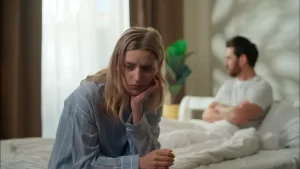
When your husband has one foot out the door, every conversation can feel really heavy. You may be watching his face for clues. Wondering if he’s softer today? More distant? Still angry? Already gone emotionally? You may be replaying old arguments, wondering which one finally pushed him away. Or maybe you are the husband reading this and thinking, “I don’t want to destroy my family, but I don’t know how much longer I can keep doing this.” This is a very painful place to be.
When one partner feels almost done, the whole marriage begins to live in a state of uncertainty. The person who wants to save the relationship may panic, pursue, cry, apologize, demand answers, or try to fix everything immediately. The person who feels one foot out the door may shut down, avoid hard conversations, say “I don’t know” over and over again, or become cold because feeling anything seems too exhausting. Neither response means the marriage is hopeless. It means the system is overwhelmed.
At Therapy Works Well, we often meet couples when they are no longer casually “working on things.” They are in a crisis. The distance has become frightening, the arguments have become repetitive, and the silence is heavy. Someone may be sleeping in another room, talking about separation, or saying they need space. Sometimes there has been an affair, years of resentment, a sexless marriage, or a slow build-up of disappointment that finally becomes too much to ignore. So, can therapy help save your marriage when your husband has one foot out the door?
Sometimes, yes. But not by pretending everything is fine. Nor by blaming one person or by rushing forgiveness. And not by forcing someone to make a forever decision before they understand what has happened between the two of you. Therapy can help when both partners are willing to slow down, tell the truth, and look at the relationship with support instead of fear.
What Does “One Foot Out The Door” Really Mean?
When someone has one foot out the door, it usually means they are not fully gone, but they are not fully present either. That in-between place can be incredibly confusing. Your husband may still come home, co-parent, pay bills, or participate in daily life. He may even still care about you. But emotionally, he may feel guarded, numb, resentful, or unsure whether he wants to keep trying. Many people assume this means the marriage is already over. We would slow that down.
A partner who says, “I don’t know if I can do this anymore,” is often expressing despair more than certainty. They may be exhausted by years of conflict. They may feel unappreciated, criticized, rejected, lonely, or emotionally unsafe. Or they may also be carrying shame about their own behavior and not know how to repair it. That does not excuse withdrawal, cruelty, avoidance, or betrayal. It simply gives us more to work with than panic.
When we sit with couples in this stage, we are not looking for a villain. We are looking for the pattern. What happens when one of you reaches for connection and the other pulls away? What happens when one of you feels criticized and the other feels ignored? How did normal stress turn into distance? Where did the two of you stop feeling like a team? These questions matter because most couples do not arrive in crisis because of one bad conversation. They arrive after years of small disconnections that were never fully repaired.
Why Weekly Therapy May Not Feel Like Enough Right Now
Traditional couples counseling can be very helpful. A weekly session gives couples structure, support, and a place to begin having conversations differently. For some relationships, that rhythm works well. But when your marriage feels like it is hanging by a thread, weekly therapy can feel too slow.
You may spend the first session explaining the crisis. Then a week passes. Another fight happens. Someone threatens to leave again. By the next session, the emotional temperature is even higher, and the therapist is trying to catch up while both of you are still bleeding from the latest argument. This is one of the reasons we often recommend a marriage intensive retreat for couples in this stage.
A couples retreat gives us more time to understand the full picture. Instead of stopping after 50 minutes just as the deeper issue finally appears, we can stay with the conversation. We can slow the reactivity, track what is happening between you, and begin building a clearer path forward.
When one partner has one foot out the door, the marriage needs more than a few communication tips. You need a protected space where both of you can speak honestly without the conversation spiraling into blame, shutdown, or panic. You need someone steady in the room who can hold the structure when the two of you cannot hold it alone.
That is part of our job. We have your back while you do the hard work. Not in the sense of taking sides, but in the sense of helping both of you stay present long enough to understand what is really happening.
What A Marriage Intensive Can Help You See
Couples often come into a marriage intensive wanting answers to questions they can’t answer on their own.
Some of these questions sound like:
- Should we stay married?
- Can we recover?
- Is he already done?
- Will she ever trust me again?
- Are we too far gone?
Those questions are understandable. Living in uncertainty is exhausting. Still, lasting clarity usually does not come from pressure. It comes from slowing down enough to see the relationship honestly.
During a marriage intensive, we can begin to explore what has brought you to this point. That may include old wounds, communication patterns, emotional disconnection, sexual distance, parenting stress, betrayal, trauma, resentment, or years of feeling unseen.
We also look at what happens in the room between you. Does one partner pursue while the other withdraws? Does one person shout because they are scared? Does the other go silent because conflict feels unbearable? Do both of you secretly want reassurance, but neither of you knows how to ask for it in a way the other can hear? These patterns are not small, they are often the engine underneath the crisis.
A marriage intensive gives us time to name those patterns and begin interrupting them. Instead of having the same fight again, we can pause and ask, “What just happened there?” We can help both partners notice the moment when protection takes over and connection disappears. That is where change begins.
When He Says He Does Not Know What He Wants
Few sentences hurt more than, “I don’t know if I want to be married.” If you are on the receiving end, it can feel cruel. You may want to shake him into certainty. You may want a promise, a plan, or proof that he is not leaving. That urgency makes sense. Your nervous system is trying to protect you from abandonment. But pressure often backfires.
When someone is unsure, forcing an answer can push them deeper into withdrawal. At the same time, the unsure partner cannot be allowed to keep the other person in emotional limbo forever. The goal is not to let one person hold all the power. It is to create a structured process where ambivalence can be explored honestly and responsibly. In a couples intensive, we can make room for uncertainty without letting it run the whole relationship.
We may ask what part of him wants to leave and what part of him has stayed. Perhaps we explore whether he is truly done or simply depleted. We may also help the other partner speak about the pain of waiting, hoping, and not knowing.
Part of our work is to be direct about this because kindness without clarity is not very helpful. If your husband has one foot out the door, we will not pretend that a weekend of therapy magically fixes years of pain. But we also will not assume the marriage is over just because one partner feels exhausted today.
People can feel done and still heal. Couples can be deeply disconnected and still find their way back. It takes honesty, courage, and a willingness to stop doing the same painful dance.
What If There Has Been Too Much Damage?
This is the question many couples are afraid to say out loud. Sometimes a marriage intensive helps a couple rebuild. Often it helps them tell the truth about how much work is ahead. And sometimes it helps them make a decision with more care and less destruction.
We do not see therapy as a place where couples are forced to stay together at all costs. That would not be ethical, and it would not be useful. Instead, we help you understand whether there is enough willingness, safety, accountability, and emotional capacity to do the repair work.
If there has been betrayal, we look at accountability. When there have been years of criticism or contempt, we look at how to rebuild respect. If there has been sexual disconnection, we look at the emotional and physical realities underneath it. If one partner has shut down, we explore what makes withdrawal feel safer than engagement. No marriage heals through wishful thinking. Hope has to be paired with action.
That action may include learning how to speak without attacking, listen without defending, repair after conflict, rebuild trust, and create new agreements. It may also include individual therapy, trauma work, or ongoing couples counseling after the intensive. A retreat is not the end of the process. It is often the beginning of a more honest one.
Why The Right Therapist Matters
When your marriage is in crisis, you need a therapist who can be warm without being vague and direct without being harsh. We know how vulnerable it feels to bring your private pain into a room with someone new. You may worry that you will be judged, blamed, or told what to do. You may also worry that therapy will become another place where the same argument repeats itself. Our approach is different.
We create a space where both partners can speak freely, but we do not let the conversation become destructive. We listen for the pain underneath the anger and pay attention to the nervous system, the relationship pattern, and the practical choices that need to change at home. We bring empathy, compassion, humor when appropriate, and clear guidance.
There is no one-size-fits-all method for a marriage in crisis. Some couples need help de-escalating conflict. Others need to process betrayal. Some need to rebuild friendship and intimacy. Others need to decide whether they are both truly willing to keep going. Wherever you are, we will meet you there. We will also tell you the truth kindly.
Can A Marriage Intensive Save Us?
A couples retreat cannot promise a specific outcome. No ethical therapist can promise that. What it can do is give your marriage a real chance to be understood before anyone makes a life-changing decision from a place of fear, anger, or exhaustion.
If your husband has one foot out the door, time matters. Not because you should panic, but because avoidance usually makes the distance grow. The longer couples stay trapped in the same pattern, the more hopeless it can begin to feel. A retreat gives you dedicated time to interrupt that pattern.
Take The Next Step Before The Door Closes Further
If your marriage feels fragile right now, needing help does not mean you have failed. It means the two of you are facing something painful enough that you should not have to figure it out alone. When one partner has one foot out the door, the instinct may be to chase, freeze, or give up. We invite you to do something different. Get support. Slow the crisis down. Let us help you understand what is happening beneath the distance, the anger, and the silence.
A couples retreat can give you the time, structure, and guidance to see whether your relationship can heal. We will not do the work for you, but we will guide you through it, hold space for the difficult conversations, and help you stay grounded when the emotions get big. And we will help you move toward clarity, whether that clarity is repair, renewed commitment, or a more honest next step.
If your husband has one foot out the door, this is not the moment to wait and hope things magically improve. Reach out today to schedule a free 15-minute consultation and learn whether a marriage intensive retreat is the right next step for your relationship.